
Packing, materials and crates
Packing and crating services
Partial or full, with materials included and custom crates for what will not survive a carton. Who packs a box also decides what the carrier is answerable for inside it.
- Materials included cartons, paper, tape
- Custom crates art, glass, stone, instruments
- Crew-packed changes what is covered
- USDOT 2138595 · MC-744411 checkable on FMCSA SAFER

What packing and crating involves
Packing is sold in two scopes. Partial packing means the crew handles the things that break: kitchen, glass, art, electronics. You do the rest. Full packing means the crew packs everything, which is what people book when the move is on a deadline or the household is large. Materials come with either: cartons, paper, tape, wardrobe boxes, mattress covers.
Crating is a separate operation, not a bigger box
A crate is built around the object itself: a marble or glass table top, a framed canvas, a mirror, a stone slab, a musical instrument. Those items fail in ways padding does not prevent. If something in your home would be a genuine loss rather than an inconvenience, it wants a crate rather than more paper.
What packing it yourself does to your cover
Cartons you pack yourself are marked PBO, for packed by owner, and that is a liability distinction rather than a note on the inventory. What a carrier is answerable for inside a carton its own crew packed and sealed is not the same as inside one it collected already closed. Self-packing to save money is a perfectly reasonable decision; making it without knowing that is not.
The hundred-dollars-a-pound line
Any article worth more than $100 per pound counts as an article of extraordinary value: jewellery, silverware, china, furs, antiques, oriental rugs. Even under full value protection a mover is permitted to limit liability on it unless it is specifically listed on the shipping documents. A wedding ring weighs almost nothing, so the threshold is met by nearly any piece of jewellery. Those items get named on the paperwork before the truck loads, or the better cover you paid for does not reach them.
- Partial packing
- The breakables kitchen, glass, art, electronics
- Full packing
- Everything materials included either way
- Owner-packed cartons
- PBO a liability distinction, not a label
- Extraordinary value
- Over $100 / lb must be listed on the shipping documents
PBO and the $100 per pound threshold are federal terms that apply to every interstate mover. The scopes and the materials are ours.
Three things that change the outcome
Why who packs the box matters
Two of these decide what a claim pays. The third decides whether the crew can take the item at all.
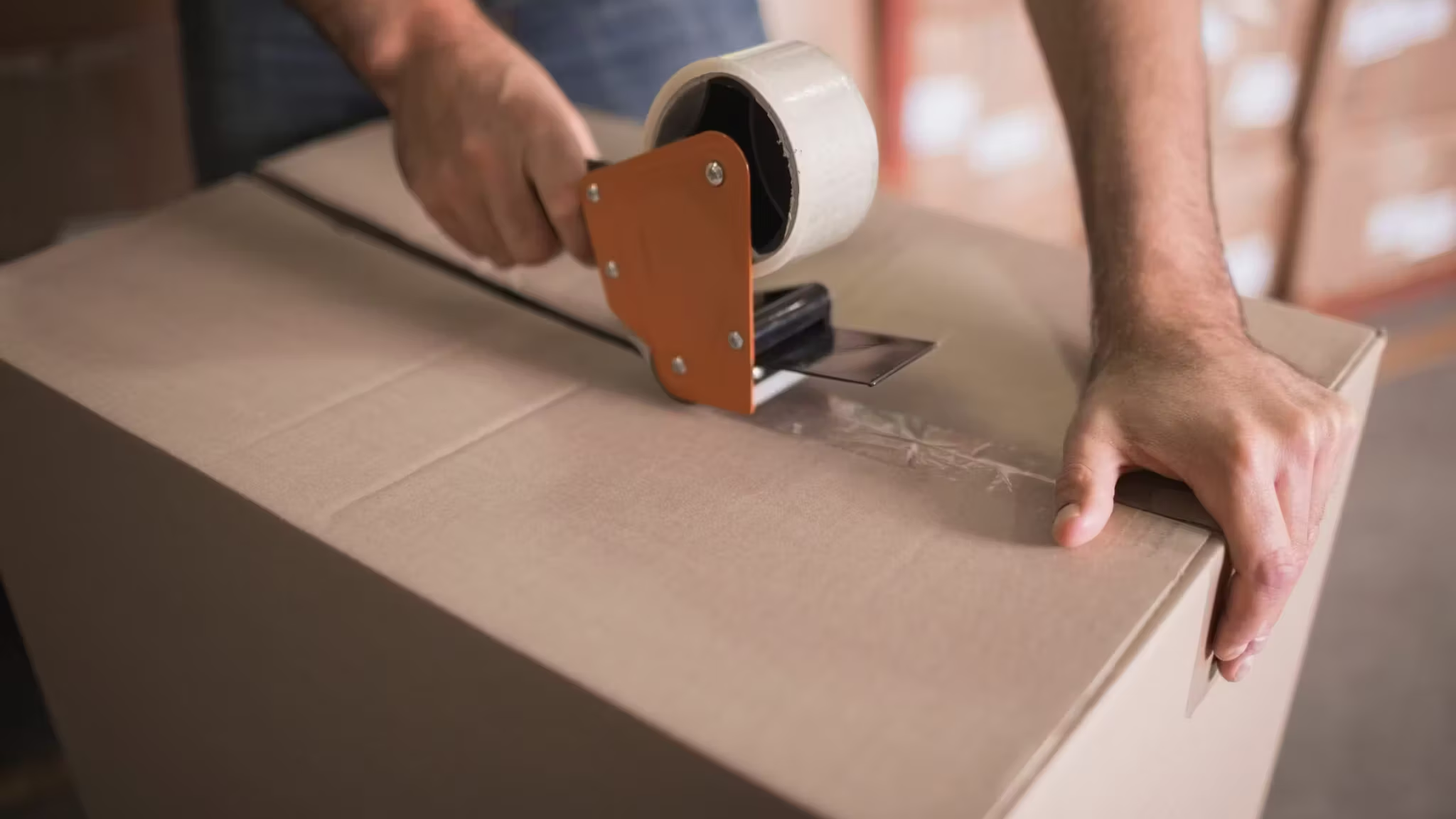
PBO packed by owner
PBO changes what is covered inside the carton
A carton packed and sealed by the crew and a carton handed over already closed are treated differently, because the carrier can only stand behind packing it can see. The trade term is PBO, for packed by owner, and it goes on the inventory. Pack your own books and linen by all means. If the box contains something that would actually hurt to lose, having the crew pack it is not an upsell, it is the difference between a covered carton and an argument.

$100 per pound = must be declared
A ring weighs nothing and clears the threshold anyway
Articles of extraordinary value are those worth more than a hundred dollars a pound, and the FMCSA names jewellery, silverware, china, furs, antiques and oriental rugs. Because the test is value against weight, almost any piece of jewellery qualifies. Even under full value protection a mover may limit liability on those articles unless they are listed by name on the shipping documents, so the declaration is not paperwork for its own sake, it is the only thing that makes the cover reach the item.

No and it is not our preference
Some things cannot go on the truck at all
Aerosols, propane, petrol, paint, solvents, ammunition, fireworks and anything corrosive or flammable are non-allowable on a household goods trailer. So are perishables on a long haul. This is a safety rule that applies to the vehicle, not a policy we chose, and the crew cannot make an exception on the day. Plants and pets travel with you. Knowing the list a week early is easier than meeting it while the truck waits.
The extraordinary-value threshold and the PBO distinction are the FMCSA's. The non-allowable list follows from hazardous materials rules for the vehicle rather than from company preference.
What it costs
What each scope includes
Packing is priced on scope and on how much of it there is. This is what each scope covers, and where crating sits alongside it.
| Scope | What the crew packs | Materials | Cover on the carton |
|---|---|---|---|
| You pack cheapest, and the cartons are owner-packed | Nothing | You buy | PBO |
| Partial the most common choice | Breakables and kitchen | Included | Crew-packed where packed |
| Full deadline moves and large households | Everything | Included | Crew-packed throughout |
| Crating art, glass, stone, instruments | Built per item | Timber, foam | Crew-packed |
Dollar figures are deliberately absent until the rate table is built rather than guessed. The cover column is not a matter of price; it follows from who packed the carton.
Get a price with packingHow a packing day runs
Three stages, usually the day before the load rather than the morning of it.
-
Walk through
The crew identifies what needs crating, what is non-allowable and what you have already packed, and the extraordinary-value items get listed.
-
Pack and label
Room by room, each carton labeled by room and contents and entered on the inventory. Owner-packed cartons are marked PBO as they are recorded.
-
Crate what needs it
Built on site around the object. Tops, canvases, mirrors and instruments go into timber rather than into a bigger box.
Crating
When more padding is the wrong answer
A crate is built around the object and takes the load through timber rather than through the item. These are the categories that need one.

- Glass & stone
- table tops, slabs, mirrors: they fail at the edge
- Art
- framed canvases and anything under glass
- Instruments
- pianos and anything with a soundboard
Built on site, around the object, not around a carton size.
What the cover actually paysWhat customers said about the packing
“the team went over and beyond in wrapping my furniture and fitting into the truck.”
-
Katelyn C.
Read on GoogleAs a real estate professional, I frequently stage homes for sale, which involves a lot of furniture and accessory movement. This has become a regular part of my job every month, and I couldn't dream of accomplishing it without the help of this fantastic moving team. Read the full review Read less
As a real estate professional, I frequently stage homes for sale, which involves a lot of furniture and accessory movement. This has become a regular part of my job every month, and I couldn't dream of accomplishing it without the help of this fantastic moving team. I've had the pleasure of working with them for over five years now. Their crew members are tremendously professional and incredibly efficient. They're always prepared and punctual, showing great attention and care to all items. They've become an integral part of my staging team, diligently assembling and placing my pieces exactly where I need them. They've even managed to pull off the seemingly impossible task of fitting a large couch through a garden door! Working in Modesto, with its crowded streets and three to four-story townhouses with tight spaces, can be quite challenging. But these movers handle it with ease and a smile on their faces. And what's more, their services come at a very reasonable price. Quite simply, I couldn't imagine moving anything without them!
-
Alan E.
Have to say that these guys are amazing they are really out going and number one in my book I would like to give a shout out to Juan, and Ralph for there help thanks again guys
Read on Yelp -
Sonya D.
Read on GoogleAmidst challenging times, we discovered Cross Country Movers Group and we're incredibly pleased with our decision. They've consistently shown a readiness to accommodate our needs, even at short notice. Read the full review Read less
Amidst challenging times, we discovered Cross Country Movers Group and we're incredibly pleased with our decision. They've consistently shown a readiness to accommodate our needs, even at short notice. Their crews are professional, courteous, and maintain a positive attitude even under strenuous conditions. Despite the difficulties, they adhered to our instructions, moving our belongings while wearing masks and practicing social distancing, ensuring everyone felt comfortable with their presence. They always arrived on time, but also displayed admirable patience if there was a delay in starting the move. Their extensive knowledge of industry standards enabled them to execute the job efficiently and appropriately. Working with this team has been a pleasure from the office staff who scheduled the job, to the crew leaders and their teams who made the move happen. They delivered excellent service at a competitive price. We had a fantastic experience and will certainly be using their services again when the need arises.
Have the fragile things packed by the crew
Priced separately from the move, so you can take the scope you actually want.
The other four
All servicesEverything is priced separately, so you can take one of these or all of them.
-
Long distance moving
Interstate household moves priced by weight and mileage, on a binding estimate, with a written delivery spread.
-
Auto transport
Open or enclosed, door to door or terminal to terminal, on the same order as the household goods.
-
Storage
Thirty days included on a long distance move, in a facility we control, released on a date you set.
-
Moving insurance
What released value and full value protection actually pay, and the one thing neither covers.
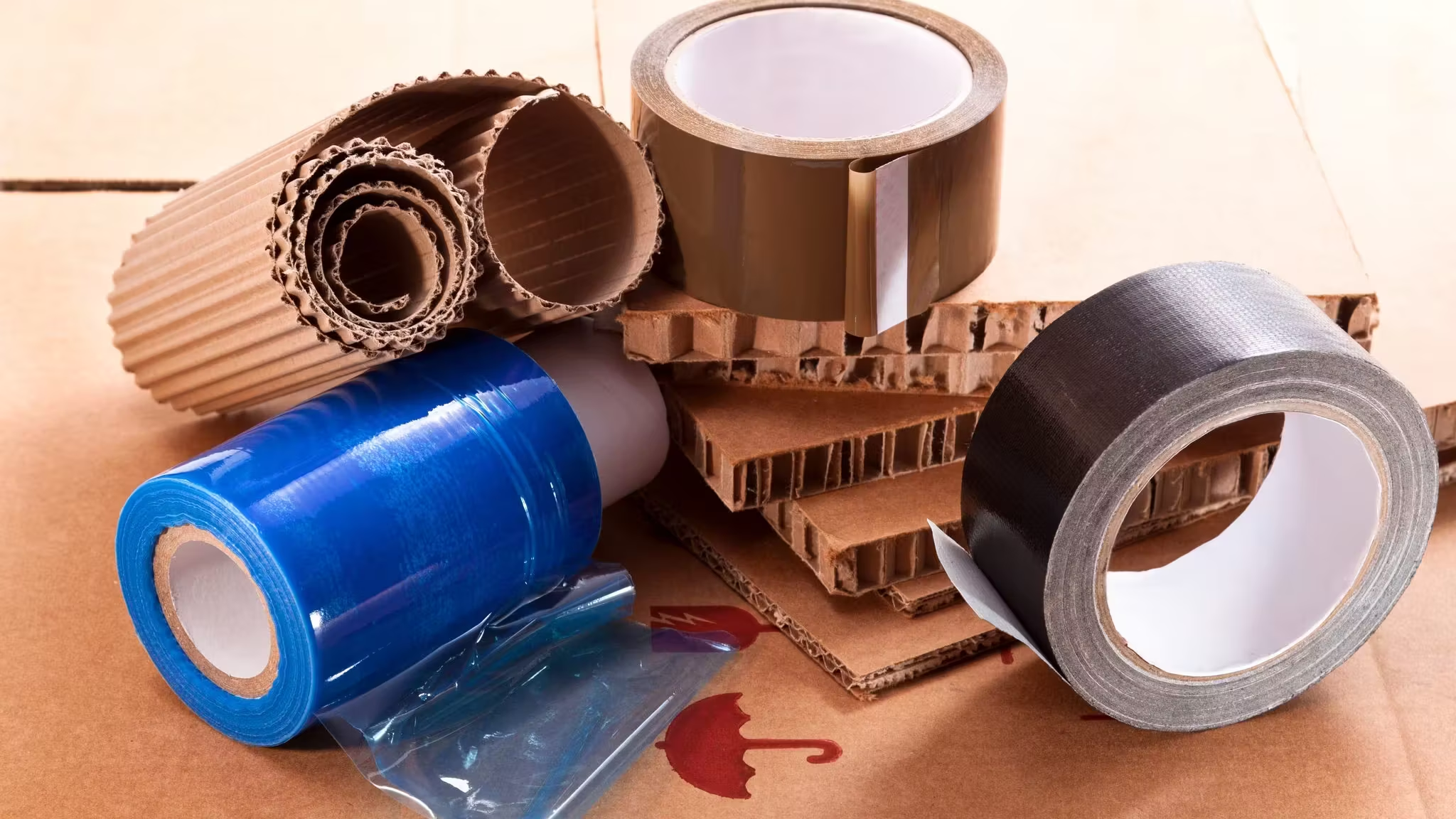
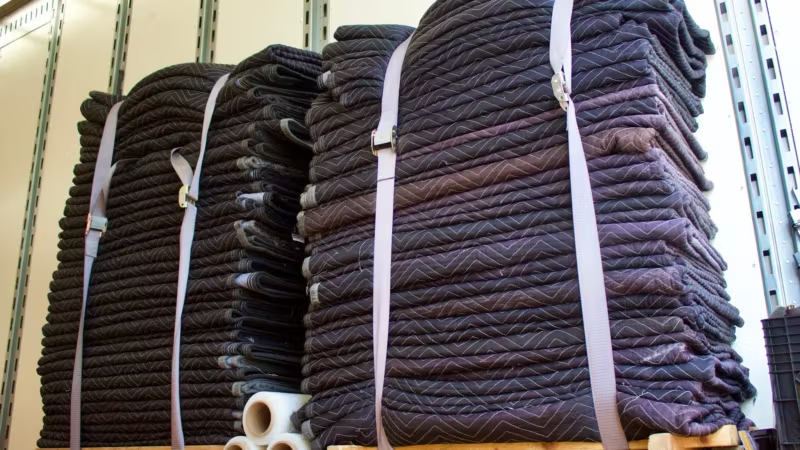
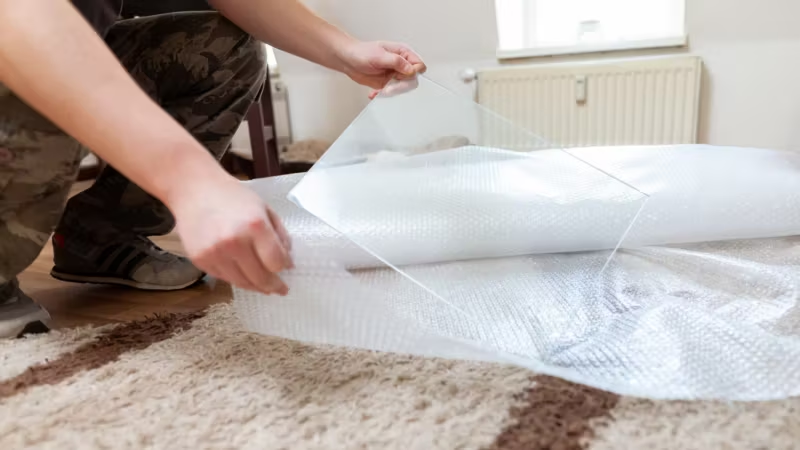
Materials, wrapping and crates
Cartons are labeled by room and by contents and entered on the inventory as they are packed. That sheet is what a claim is measured against, so it is worth reading before you sign it.


Where packing decisions change
Climate and access change what needs crating and what needs to leave the house first: heat and humidity in the south, walk-ups and long carries in the older cities.
-
 Movers in Miami
heat and humidity
Movers in Miami
heat and humidity
-
 Movers in San Francisco
stairs and long carries
Movers in San Francisco
stairs and long carries
-
 Movers in Houston
summer loading
Movers in Houston
summer loading
Is it cheaper to pack myself?
Yes, and it changes the liability on those cartons. Owner-packed boxes are marked PBO on the inventory, and what the carrier is answerable for inside them is not the same as inside a carton its own crew packed and sealed. Books and linen are a sensible thing to pack yourself; the glass cabinet is not.
What is the difference between partial and full packing?
Partial means the crew packs the breakables: kitchen, glass, art and electronics. You do the rest. Full means the crew packs everything. Materials are included either way.
Are materials included?
Yes, on partial and full packing: cartons, paper, tape, wardrobe boxes and mattress covers. If you pack yourself you buy your own.
What needs a crate rather than a box?
Glass and stone table tops, mirrors, slabs, framed art, and instruments with a soundboard. Those items fail at the edge or under flex, which padding inside a carton does not prevent. Crates are built on site around the object.
Do I have to declare valuables?
Anything worth more than $100 per pound, yes: by name, on the shipping documents, before loading. That includes almost all jewellery, plus silverware, china, furs, antiques and oriental rugs. Without the declaration a mover may limit liability on those articles even under full value protection.
What will the crew not pack?
Aerosols, propane, petrol, paint, solvents, ammunition, fireworks and anything corrosive or flammable. These are non-allowable on the trailer under hazardous materials rules, not a company preference. Perishables do not travel on a long haul, and plants and pets go with you.
When does packing happen?
Usually the day before the load rather than the morning of it, so the crew is not packing and carrying at the same time. On a small shipment both can happen in one day.
Get packing priced with the move
Take one scope or all of it. No deposit to get a number.
Get a price for packing and crating
Two ZIP codes and a date is enough to start. A coordinator confirms the scope, what needs crating and what has to be declared before anything is booked.