
Valuation and insurance
Moving insurance and valuation coverage
Every interstate mover has to offer you two levels of liability. One is free and pays sixty cents a pound. The other is the default if you sign nothing. Neither is insurance, and your home policy does not fill the gap.
- Full value the federal default
- 60¢ per pound free, if you choose it
- $100 a pound the line you must declare
- USDOT 2138595 · MC-744411 checkable on FMCSA SAFER

What the two liability levels cover
Under federal law an interstate mover must offer two levels of liability, and the industry calls them valuation coverage. Released value makes the mover responsible for no more than sixty cents per pound per article. Full value protection makes the mover responsible for the replacement value of what is lost or damaged. Most of what is written about this gets the important part backwards.
Which level applies if you choose nothing
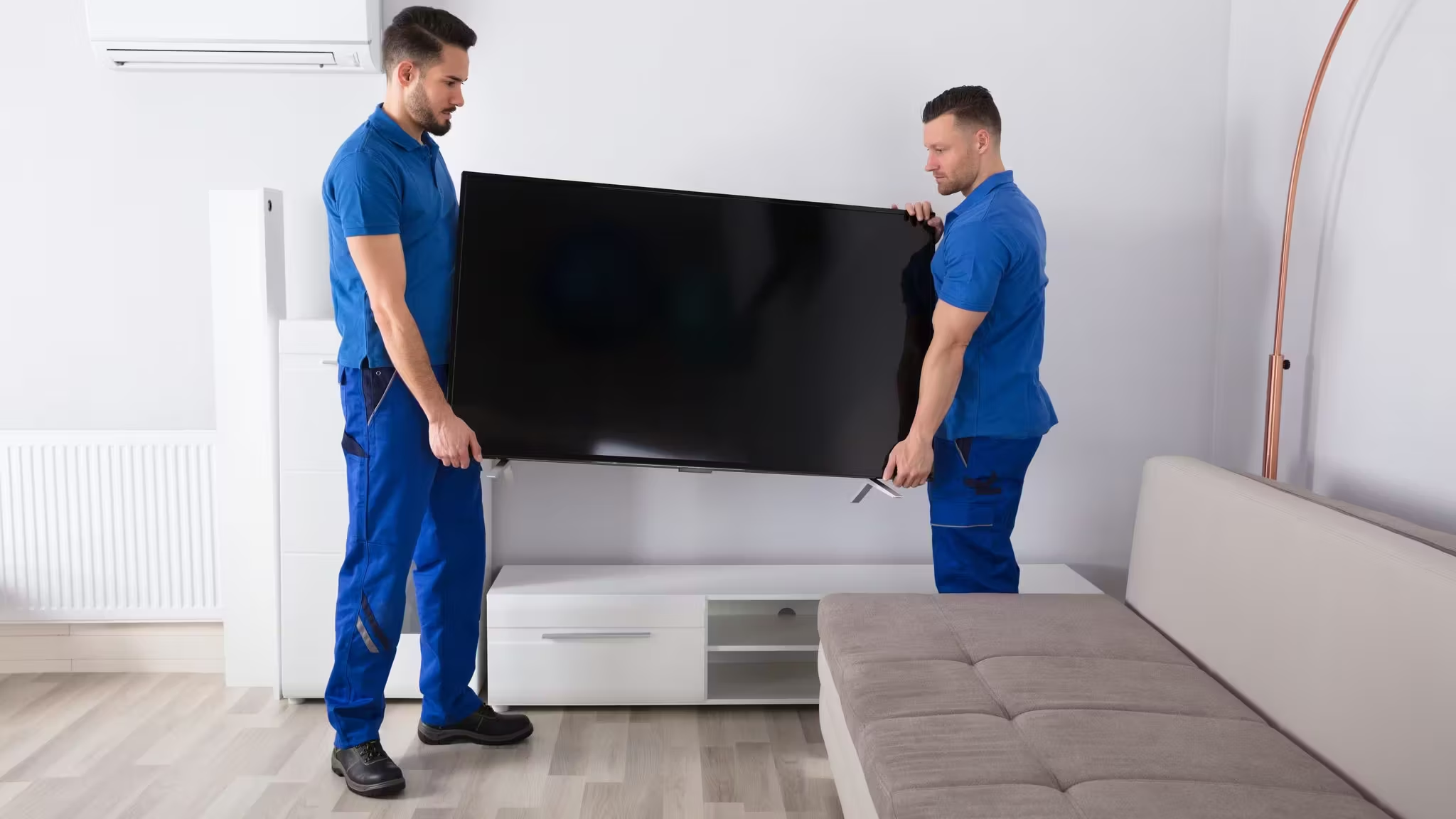
Released value is free, and it is the one you have to ask for. If you do not select it, your shipment moves under full value protection automatically. So the cheap option is an opt-in, not a default. That matters, because sixty cents a pound is not a discount on a settlement; it is usually the difference between a settlement and a gesture. The Federal Motor Carrier Safety Administration’s own worked example is a fifty-inch television weighing twenty-five pounds: under released value that pays fifteen dollars.
Neither level is insurance
Full value protection and released value are not insurance policies governed by state insurance law. They are federal contractual tariff levels of liability, authorized under Released Rates Orders of the Surface Transportation Board. That is not a technicality. It decides who you complain to, what law applies, and what a claim is actually against. A mover may separately sell or obtain real liability insurance for a customer who has chosen released value, and that product is governed by state insurance law. So there are three things in this area, not two.
- Released value
- 60¢ / lb per article, free, and you have to choose it
- Full value protection
- Replacement the default if you select nothing
- Extraordinary value
- Over $100 / lb must be listed on the shipping documents
- Your home policy
- Not handling covers the property, not the movers moving it
Sixty cents per pound per article and the $100 per pound threshold are federal figures, not ours. The valuation options are set out by the FMCSA; the home-policy limit is the Insurance Information Institute's own wording.
Three things people find out too late
Where moving insurance cover falls short
None of these is unusual. All three are ordinary situations where a customer thought they were covered and was not.
60¢ per pound, per article
The cheap option is the one you opt into
Released value protection costs nothing and pays no more than sixty cents per pound per article. A twenty-five pound television pays fifteen dollars; a forty pound box of glassware pays twenty-four. It is a real option and there are shipments it suits, but it is a choice you make in writing rather than a setting you drift into, and a customer who signed it because it was free and thought it was standard has usually not read what standard is.

$100 per pound = extraordinary value
A hundred dollars a pound is lower than it sounds
Anything worth more than a hundred dollars a pound counts as an article of extraordinary value: the FMCSA names jewellery, silverware, china, furs, antiques and oriental rugs. Even under full value protection a mover is permitted to limit liability on those articles unless they are specifically listed on the shipping documents. A wedding ring weighs almost nothing, so the threshold is met by almost any piece of jewellery. Declare them and recovery is full up to the declared value; leave them off and the better option you paid for does not reach the box that mattered.
0 paid for handling damage
Your home policy stops at the movers’ hands
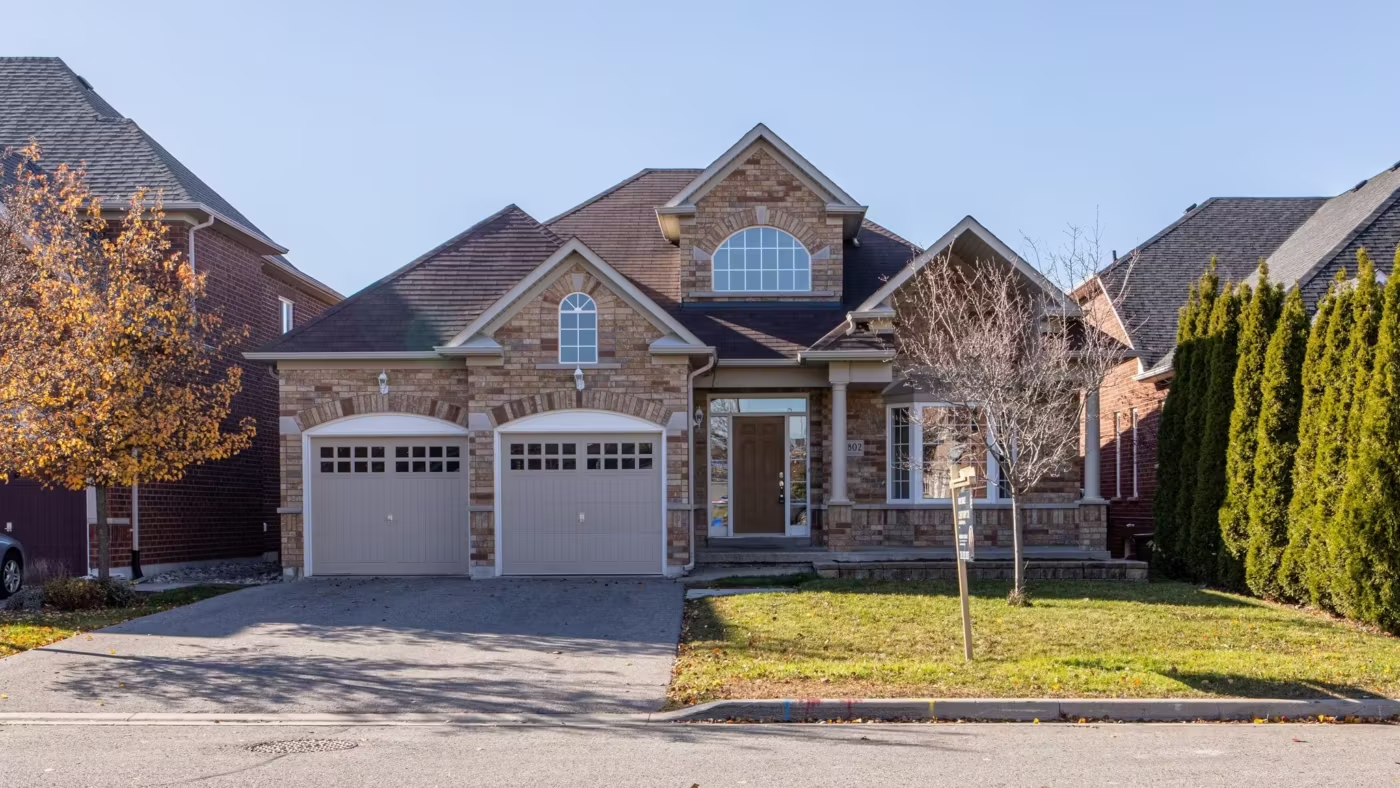
Homeowners and renters policies do cover your belongings at your residence, in transit, and in storage. What they will not pay for, in the Insurance Information Institute's own words, is damage done to personal property while it is being handled by the movers, while it is being packed or physically moved. That is precisely where moving damage comes from. The product that fills the gap is trip transit insurance, written either for the full value of the property or as excess above the mover's valuation, and it is worth asking your own insurer about before you assume you are covered.
The valuation figures are the FMCSA's. The homeowners-policy limitation is quoted from the Insurance Information Institute. We publish no claim-approval or settlement-time statistics because we have not been given any to publish.
How a moving insurance claim works
Four stages. The paperwork that decides the outcome is signed at stage one, not at stage three.
-
Choose, in writing
Full value or released value, on the bill of lading, before the truck loads. Articles over $100 a pound go on the shipping documents by name at the same time.
-
Inventory at the door
Every item is listed and its condition noted as it is loaded. This is the document a claim is measured against, so read it before you sign it rather than after.
-
Note it at delivery
Anything missing or damaged is recorded on the delivery paperwork while the crew is still there. A note made at delivery is worth more than a photograph taken a week later.
-
File with a named coordinator
Your claim goes to the coordinator who booked the move, not to a general queue. They tell you what the valuation you chose actually pays before you spend time on the form.
The three numbers
What each level of cover pays
Two of these are federal minimums and the third is a threshold you have to act on. None of the three is set by us, and any interstate mover is working from the same figures.

- 60¢ / lb
- released value: free, per article, and an opt-in
- Full value
- replacement value: the default if you choose nothing
- $100 / lb
- above this, an article must be declared by name
The inventory is the document a claim is measured against.
How the price is builtWhat happened when a customer claimed
“However, the company was quick to reimburse me for the cost of the damaged items within a month and a half. A technician visited my new residence in Modesto to assess the damage after about a month.”
-
Tatiana H.
Read on YelpI contacted Cross Country in a panic when another moving company completely blew their pick up date and left me stranded. Not only was Cross Country able to pick up my life within 72 hours, every single person I interacted with was kind, thorough and (gasp!) even funny! Read the full review Read less
I contacted Cross Country in a panic when another moving company completely blew their pick up date and left me stranded. Not only was Cross Country able to pick up my life within 72 hours, every single person I interacted with was kind, thorough and (gasp!) even funny! Moving is tough. This move was from Boulder, CO to Detroit, MI in the middle of winter. The team at Cross Country not only saved the day, they went above and beyond to make sure all our timing hit just right. My stuff was picked up on a Tuesday and delivered on Friday of the same week. The movers in Colorado were great – easy going yet efficient and very careful with my items. The dispatch team is as good as it gets. Overall, dependable, quality service at competitive rates. They may be slightly more than others but when it comes to moving, you get what you pay for. These guys offer peace of mind and ease in addition to outstanding service. Would absolutely use again.
-
Alyssa H.
Read on Googlerelocating two storage facilities into one is a massive endeavor. i feel fortunate to have been directed to the team at cross country movers group. like any sensible person, i gathered 3 estimates for shifting my packing machinery. Read the full review Read less
relocating two storage facilities into one is a massive endeavor. i feel fortunate to have been directed to the team at cross country movers group. like any sensible person, i gathered 3 estimates for shifting my packing machinery. the three proposals were highly competitive, but the technician from cross country movers group elevated the estimation process. he inquired about all the right details and delivered a comforting customer experience. from inception to completion, this team took charge of everything. i was kept in the loop all week with updates on their progress or any possible delays. collaborating with the crew was the most seamless relocating experience i’ve ever had. i was able to concentrate on other tasks while they handled the move. the work was finished in 3 weeks, with 4 large presses, 2 small presses, and 5 other machines all relocated without a single issue. i greatly appreciate the outstanding service you guys provided!
-
Wendi W.
Read on YelpMy husband and I recently made a cross country move from SF Bay area to Maryland. We used Cross Country movers and had an excellent experience. Read the full review Read less
My husband and I recently made a cross country move from SF Bay area to Maryland. We used Cross Country movers and had an excellent experience. Researching online about long-distance moves resulted in many very negative and costly experiences, so we were naturally concerned about selecting a moving company. None of those concerns applied to our experience with CCM and we highly recommend their services. From the walk-thru with us for the estimate, to preparation, packing and pick-up, their entire team was a pleasure to work with. On moving day, the team was very professional and responsive. I had packed the majority of our household goods, but left the larger and more fragile items, along with the furniture, to be packed by CCM. They were extremely careful with our household goods in disassembly, packing and loading. They were very efficient and completed the load up in the time frame promised (1.5 days). They made sure to address any concerns we had with the move process and the security of our furniture and goods before they left.
Ask what your cover actually pays
A coordinator will tell you which level applies to your shipment and what it settles at, before you book.
The other four
All servicesEverything is priced separately, so you can take one of these or all of them.
-
Long distance moving
Interstate household moves priced by weight and mileage, on a binding estimate, with a written delivery spread.
-
Auto transport
Open or enclosed, door to door or terminal to terminal, on the same order as the household goods.
-
Packing and crating
Partial or full, materials included, with custom crates for what will not survive a carton.
-
Storage
Thirty days included on a long distance move, in a facility we control, released on a date you set.
Inventory, wrapping and the paperwork that goes with them
Every item is tagged and its condition recorded as it is loaded. That sheet, not a phone photo, is what a claim is settled against.




Where this comes up most
Valuation is federal and identical everywhere, but the arguments about it are local: high-value contents, long carries, and buildings that require their own paperwork.
-
 Movers in New York
walk-ups and building COIs
Movers in New York
walk-ups and building COIs
-
 Movers in Los Angeles
art, glass and long carries
Movers in Los Angeles
art, glass and long carries
-
 Movers in Boston
narrow streets, older buildings
Movers in Boston
narrow streets, older buildings
Is moving insurance the same as valuation?
No, and the difference is legal rather than semantic. Full value protection and released value are not insurance policies governed by state insurance law. They are federal contractual tariff levels of liability authorized under Released Rates Orders of the Surface Transportation Board. Actual insurance is a separate product a mover may sell or obtain for you, and that one is governed by state insurance law.
Which option do I get if I do not choose?
Full value protection. Released value is free but you have to select it; if you select nothing, your shipment is transported under full value protection.
What does sixty cents a pound actually pay?
Sixty cents for every pound of the article that was lost or damaged. The FMCSA's own example is a fifty-inch television weighing twenty-five pounds, which pays fifteen dollars. It is the weight of the item that decides the figure, not what the item is worth.
What counts as an article of extraordinary value?
Anything worth more than $100 per pound. The FMCSA names jewellery, silverware, china, furs, antiques and oriental rugs. Under full value protection a mover may limit liability on those articles unless you list them specifically on the shipping documents, so they need declaring by name before the shipment loads.
Does my homeowners insurance cover the move?
Partly, and not the part you need. Homeowners and renters policies cover your belongings at your residence, in transit and in storage, but they will not pay for damage done while the movers are handling the items, which is when moving damage happens. Trip transit insurance is the product that covers that, either at full value or as excess over the mover's valuation.
Is my car covered by the same valuation?
No. A vehicle moves under the auto carrier's own cargo policy, which is a separate limit from the household goods valuation on your bill of lading. Ask for the figure: on our own auto moves it is $100,000 open and $500,000 enclosed.
What about things I packed myself?
Cartons you pack are marked PBO, for packed by owner, and what the carrier is answerable for inside them is not the same as for a carton its own crew packed and sealed. If the contents matter, either have them packed by the crew or expect the distinction to come up in a claim.
One call settles what you are covered for
No deposit, no obligation, and a coordinator who can read your inventory back to you.
Get a price with the cover spelled out
Two ZIP codes and a date is enough to start. A coordinator confirms which valuation applies and what it settles at before anything is booked.